 Español
 العربية
 Deutsch
 English
 Français
 Italiano
 Português
 Русский
 Türkçe
 Tiếng Việt


Website Legal Compliance: The Master Guide to Privacy Policies, Terms of Service, and AdSense Approval
Navigating GDPR, CCPA/CPRA, COPPA, cookie consent banners, and Google publisher policies.
 By LinkeFly Editorial Team
Building a functional, feature-rich web application is only half the battle. Every website accessible on the public internet is subject to an intricate web of international consumer privacy statutes and publisher network compliance mandates. Operating a website without standardized legal documentation exposes webmasters to civil regulatory fines, intellectual property disputes, and immediate rejection from advertising monetization networks like Google AdSense.
From the European Union's aggressive General Data Protection Regulation (GDPR) to the California Consumer Privacy Act (CCPA/CPRA), compliance is no longer a corporate formality—it is a mandatory technical requirement. In this comprehensive compliance guide, we break down essential legal agreements, dissect Google AdSense policy checklists, and outline cookie consent architectures.
1. The 5 Pillars of Website Legal Compliance
Every commercial website, digital publisher, and online utility must maintain five distinct legal documents:
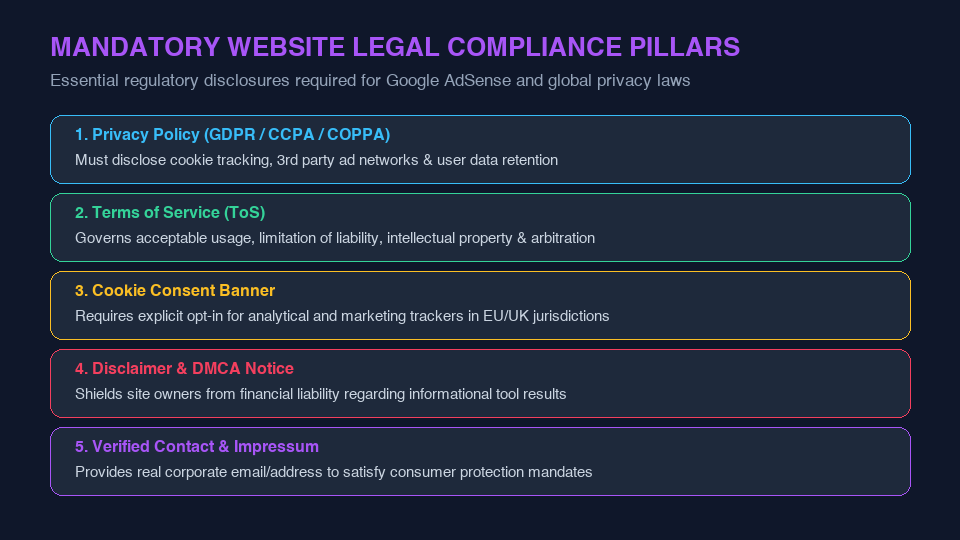
A. Privacy Policy (Statutory Requirement)
Unlike other policies, a Privacy Policy is legally mandated across dozens of sovereign jurisdictions. It must explicitly declare:
- What personal data is collected (IP addresses, cookies, browser user-agents, email addresses)
- How data is collected (server logs, analytical trackers, form submissions)
- Third-party data sharing (Google Analytics, Google AdSense, payment processors)
- User rights to request data access, correction, or permanent erasure (GDPR "Right to be Forgotten")
B. Terms of Service / Terms & Conditions
The Terms of Service (ToS) functions as a legally binding contract between your website and the visitor. It establishes acceptable use rules, prohibits malicious scraping, asserts your intellectual property copyright, limits your financial liability, and dictates governing law and dispute resolution venues.
2. Google AdSense Compliance Checklist
Google AdSense rejects thousands of publisher applications daily under the umbrella violation of "Site does not meet AdSense program policies". To guarantee compliance:
- Disclose DoubleClick DART Cookies: Your Privacy Policy must explicitly state that Google uses cookies to serve ads based on a user's prior visits to your site or other sites on the internet.
- Provide an Opt-Out Mechanism: You must inform visitors how they can opt out of personalized advertising by visiting aboutads.info or Google Ads Settings.
- Clear Site Architecture: Prominent links to Privacy Policy, Terms of Service, About Us, and Contact Us must be directly accessible from the persistent footer on every single page.
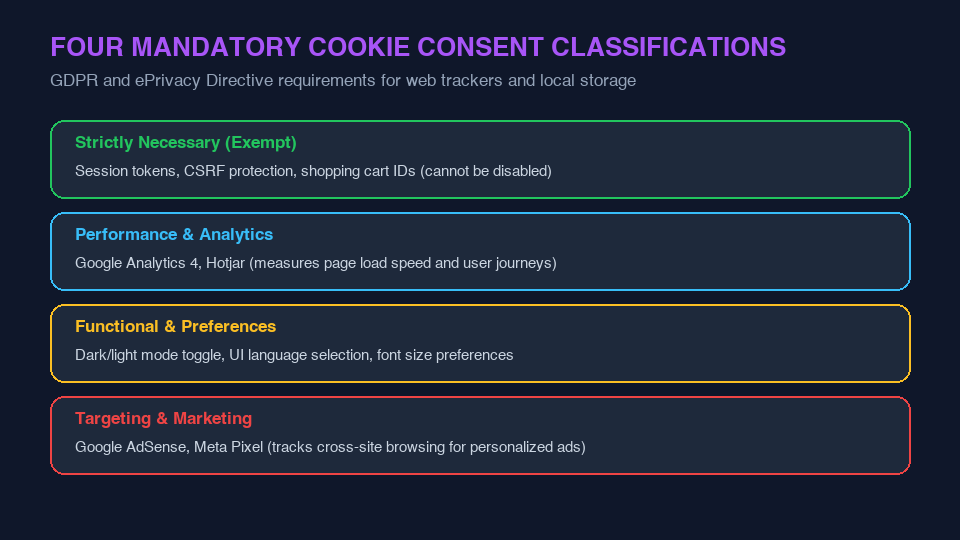
Generate Tailored Legal Policies in Minutes
Need compliant legal agreements for your blog, startup, or e-commerce store? Utilize LinkeFly's free generators: build a custom policy with the Privacy Policy Generator and establish binding terms with our Terms & Conditions Generator.